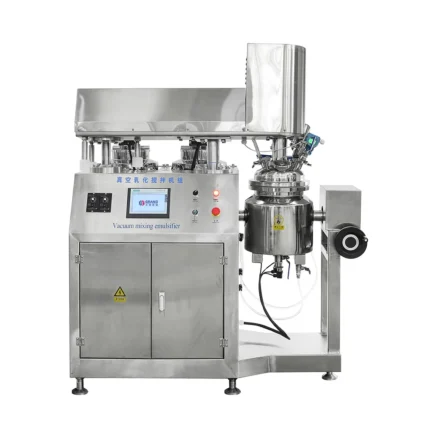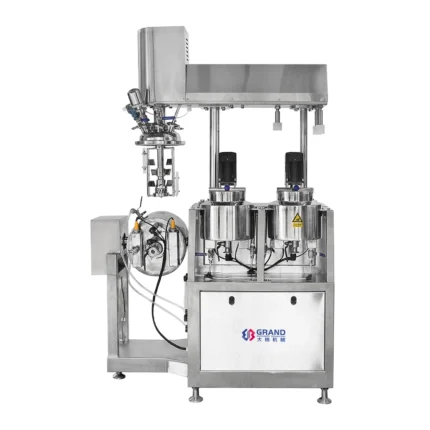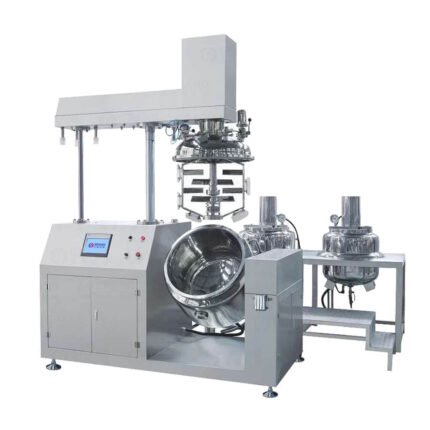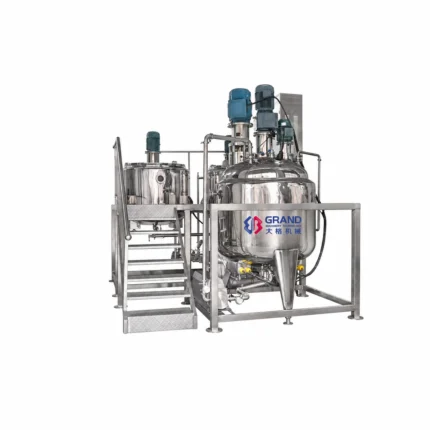
500L Vacuum Emulsifying Mixer

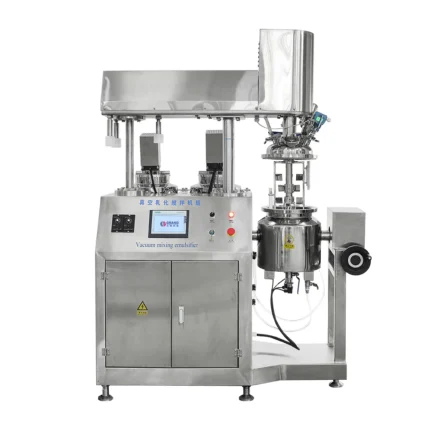
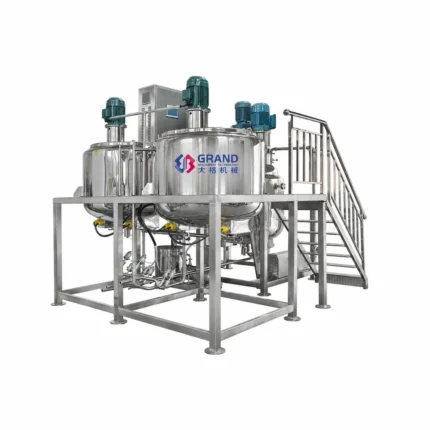
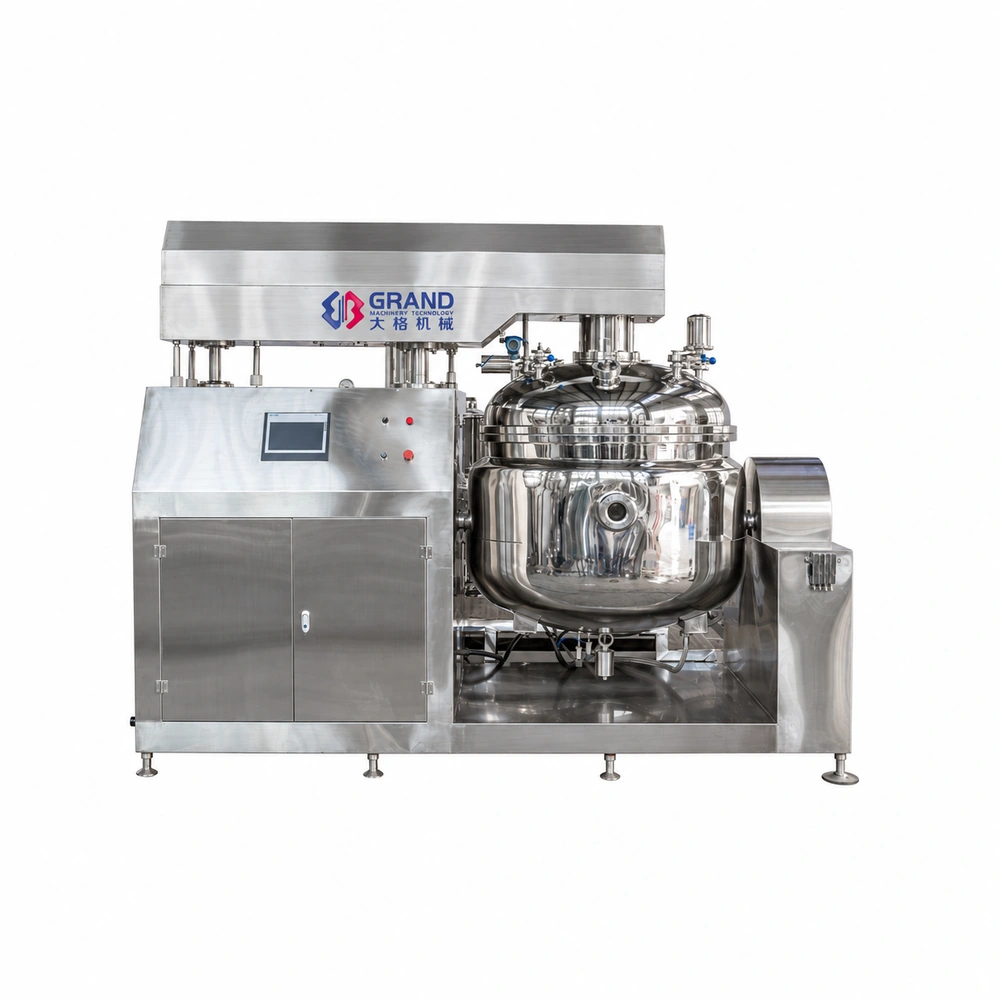
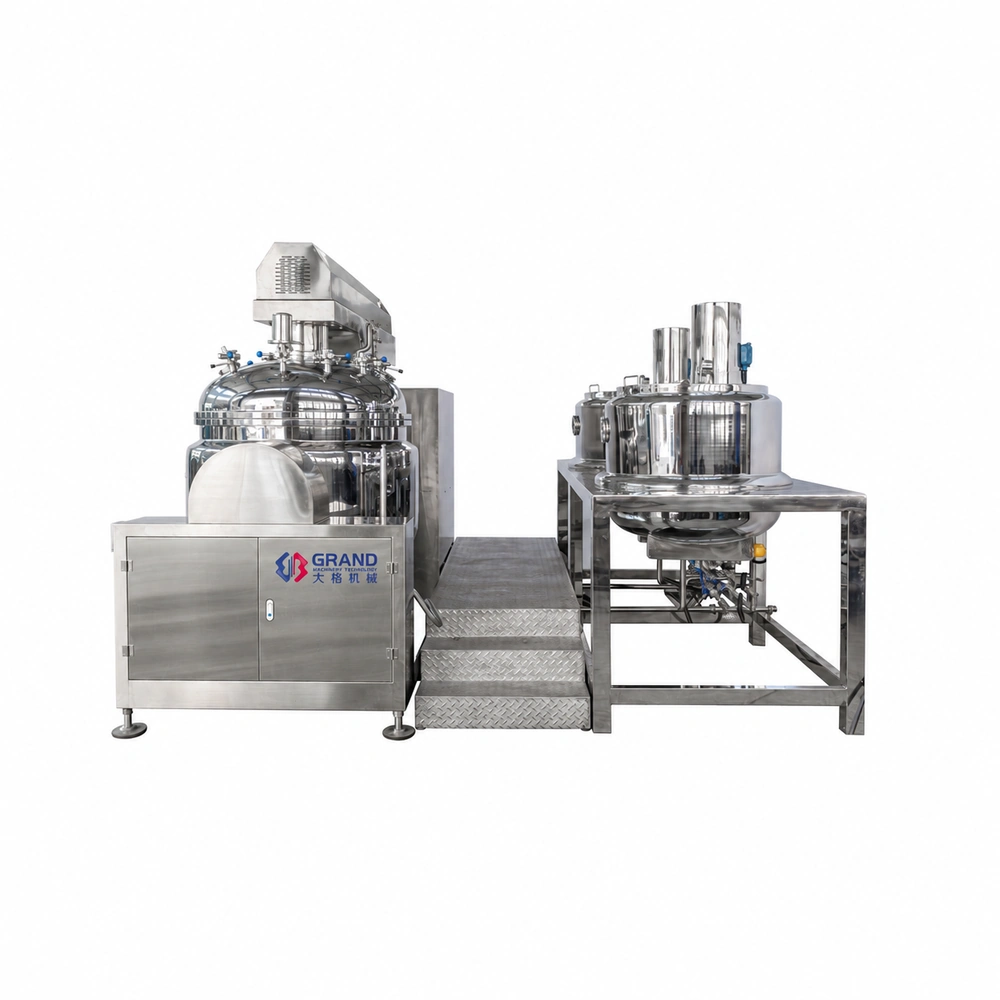
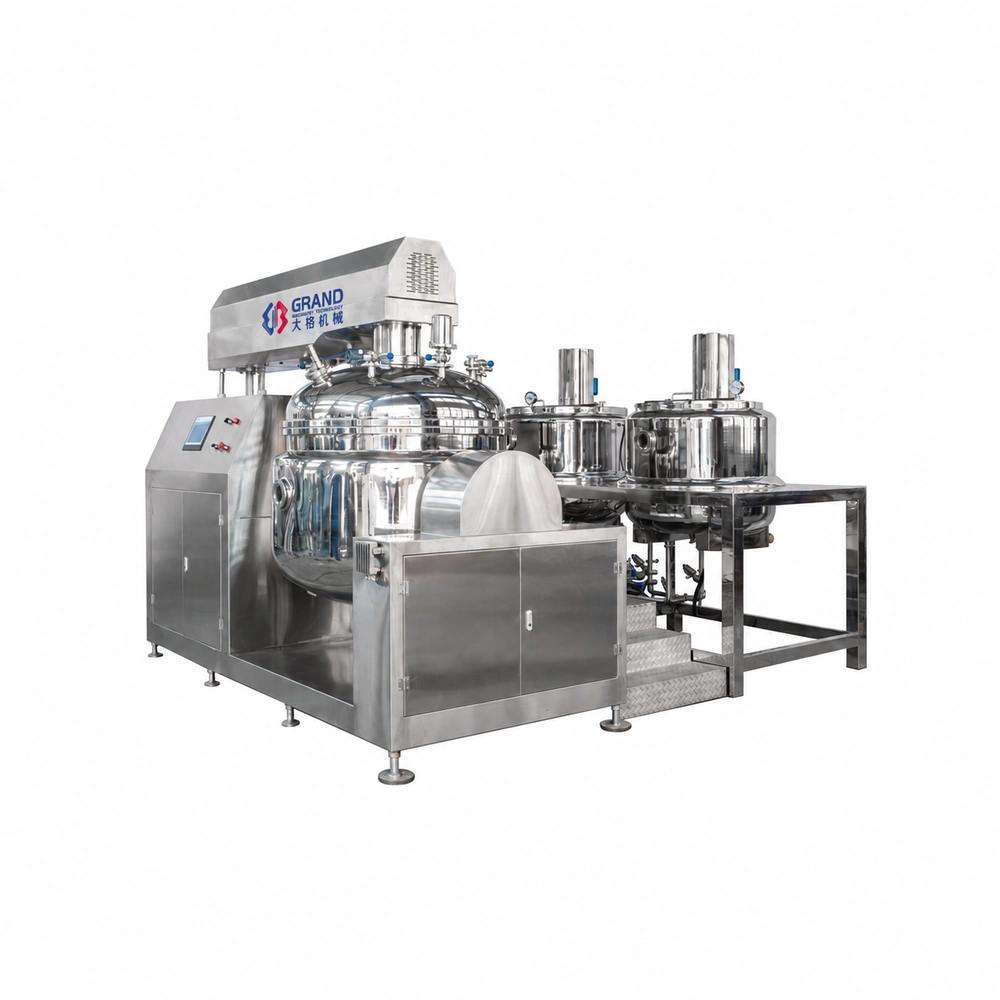
The CB500 is a 500L vacuum emulsifying mixer for creams, pastes and other viscous formulations. It combines frame agitation, high-shear homogenization, a 500L oil pretreatment tank and a water-ring vacuum system.
Description
Key Features

500L Vacuum Emulsifying Mixer

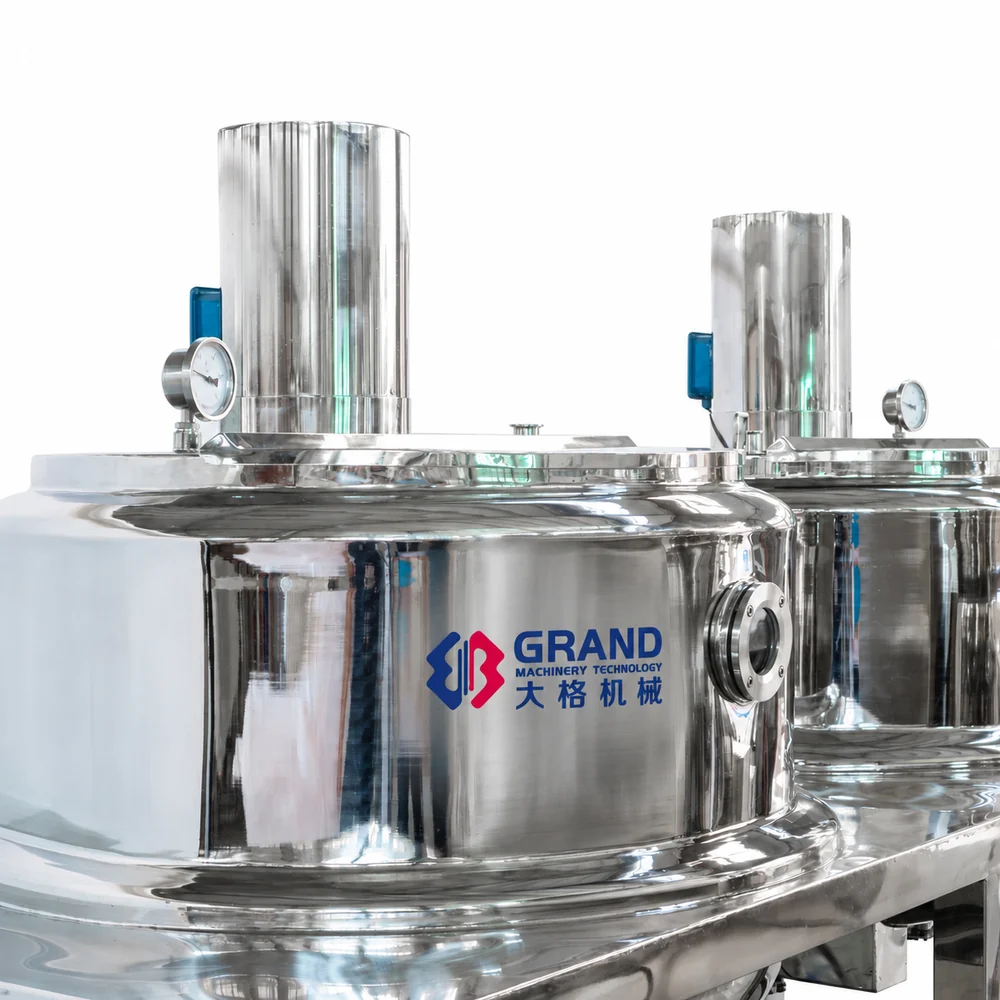
  • A 620 L main vessel provides a 500 L working volume for creams, pastes and other viscous formulations.
  • A 3.7 kW frame agitator operates at 0–50 rpm with variable-frequency speed adjustment.
  • A 7.5 kW high-shear homogenizer operates at 0–3000 rpm with variable-frequency speed adjustment.
  • A separate oil pretreatment tank provides a 500 L working volume for ingredient preparation.
  • The oil tank uses a 1.5 kW turbine agitator at 0–960 rpm with variable-frequency speed control.
  • The main vessel has a specified vacuum degree of −0.09 MPa for vacuum processing.
  • The vacuum system uses a 4 kW water-ring pump, model 2BV2071.
  • Maximum working temperatures are 130°C for the main vessel and 110°C for the oil pretreatment tank.
  • The main vessel jacket and oil tank jacket each have an allowable working pressure of 0.3 MPa.
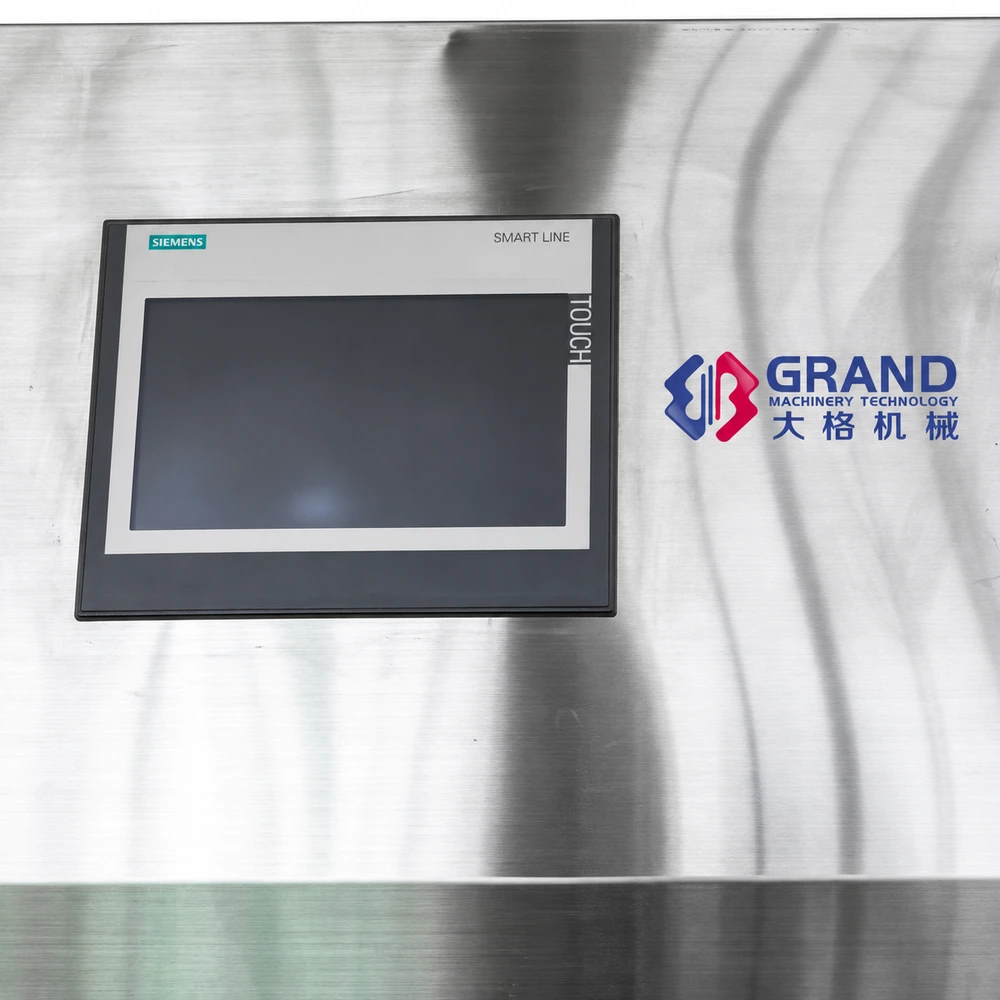
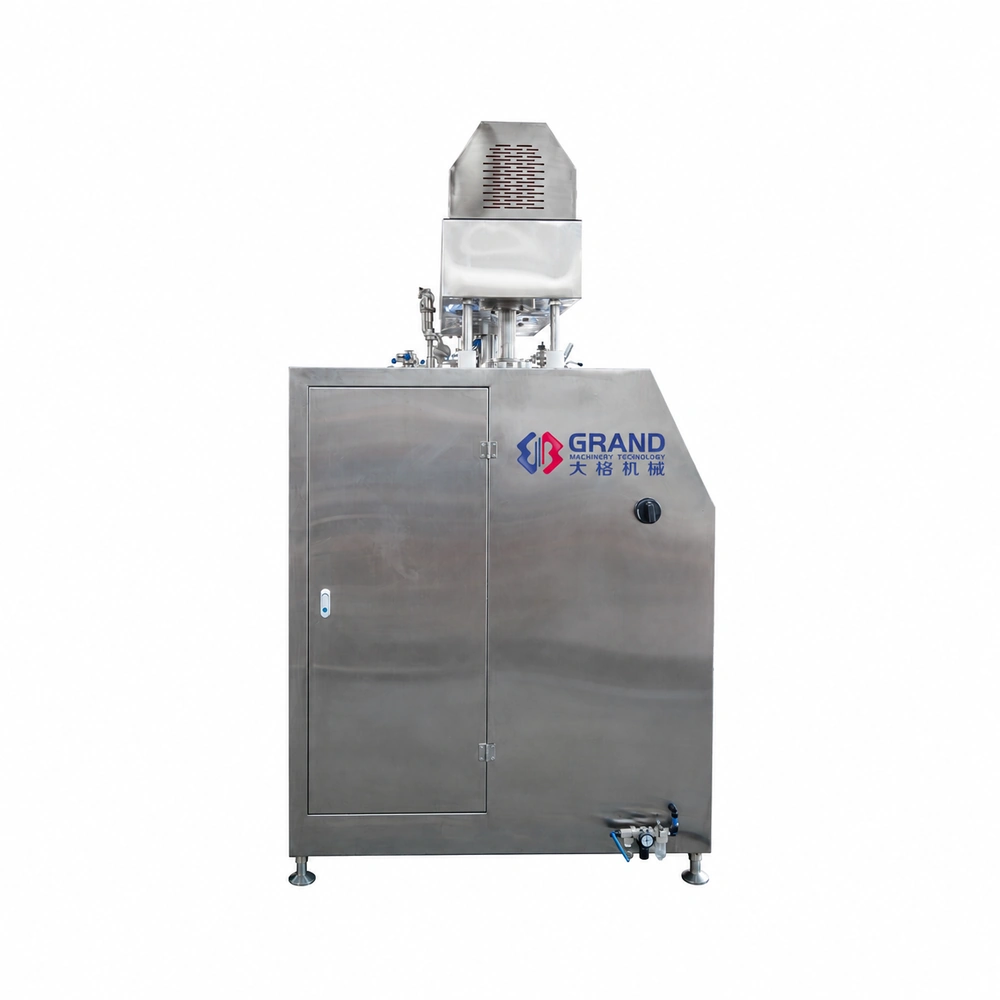
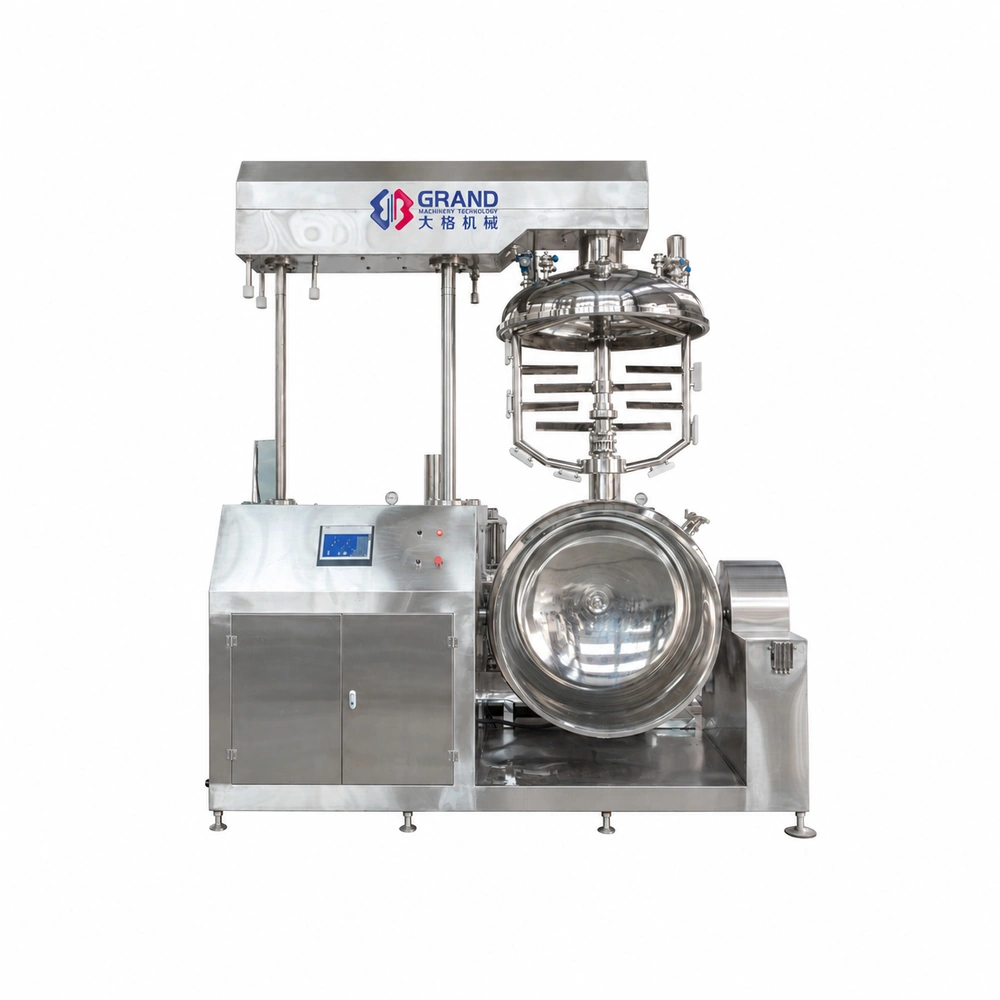
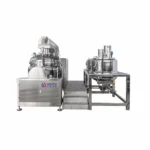
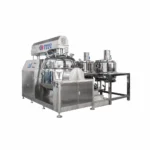
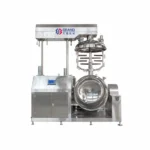
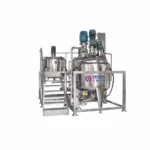
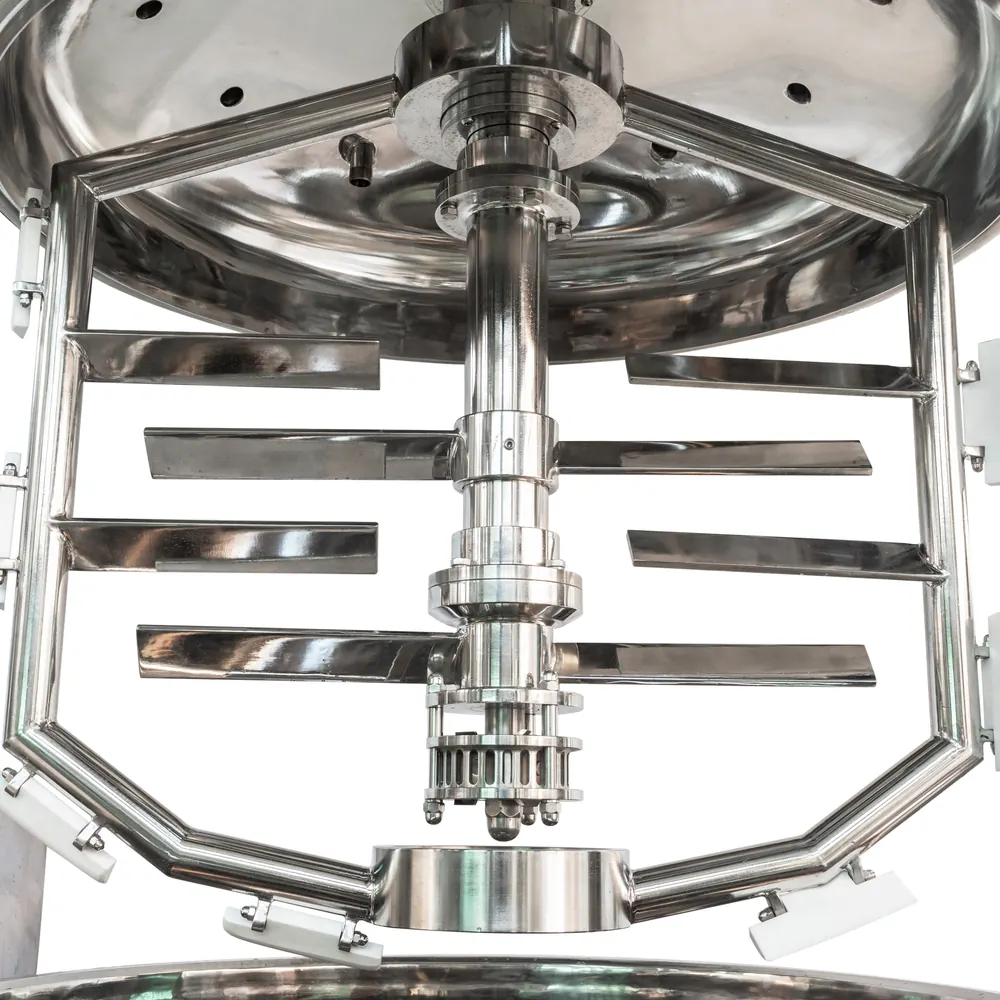
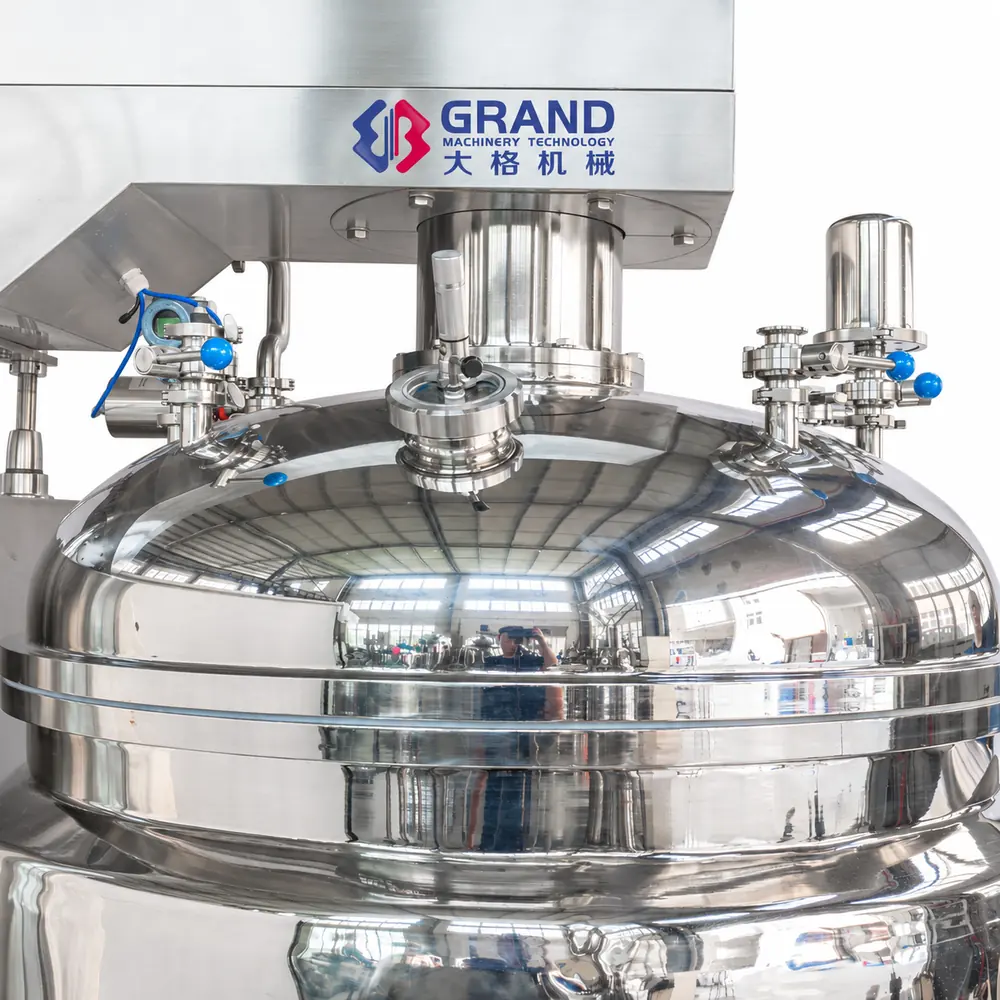
  • Touchscreen and push-button controls support operation. Photographs show the raised mixing assembly and tilting main vessel.
How It Works

How the CB500 Mixing System Works

Ingredients can be prepared in the separate 500 L oil tank using its variable-speed turbine agitator. The main emulsifying vessel provides a 500 L working volume within a 620 L total volume, with frame agitation and high-shear homogenization for batch mixing.

The 3.7 kW frame agitator and 7.5 kW homogenizer have independently specified speed ranges. A 4 kW water-ring vacuum pump supports the vacuum system, with a specified vessel vacuum degree of −0.09 MPa. Operators use the touchscreen and push buttons to operate the equipment according to the agreed formulation and process settings.

Machine Details

Specifications

Technical Specifications

Explore the CB500 main vessel, oil pretreatment tank, mixing drives and vacuum system specifications for 500 L batch processing.

Machine Specifications

SpecificationCB500
Main Emulsifying Vessel
ModelCB500
Total Volume620 L
Working Volume500 L
Jacket Working Pressure0.3 MPa
Maximum Working Temperature≤130°C
Operator ControlsTouchscreen and push buttons
Oil Pretreatment Tank
Working Volume500 L
Jacket Working Pressure0.3 MPa
Maximum Working Temperature≤110°C
Agitator TypeTurbine
Agitator Power1.5 kW
Agitator Speed0–960 rpm, variable frequency
Main-Vessel Agitation and Homogenization
Slow Agitator TypeFrame
Slow Agitator Speed0–50 rpm, variable frequency
Slow Agitator Power3.7 kW
Homogenizer Speed0–3000 rpm, variable frequency
Homogenizer Power7.5 kW
Vacuum System
Vessel Vacuum Degree−0.09 MPa
Vacuum Pump Model2BV2071
Vacuum Pump Power4 kW
Vacuum Pump TypeWater ring

Note: The 500 L working volume and 620 L total volume refer to the main vessel. The oil pretreatment tank has a separate 500 L working volume. Jacket pressure and vessel vacuum degree describe different operating conditions. Final equipment configuration and site utilities are confirmed in the technical quotation.

Vacuum Mixing Applications

Products & Applications

The CB500 combines oil-phase pretreatment, frame agitation, high-shear homogenization and a water-ring vacuum system for compatible creams, pastes and viscous formulations.

Cosmetic Creams and Pastes

Creams, cosmetic pastes and other viscous formulations that require frame agitation and high-shear homogenization.

Personal Care Formulations

Lotion bases and compatible personal care blends, with process settings selected around the ingredients and intended batch size.

Food Emulsions and Blends

Compatible cream-based mixtures, food emulsions and viscous blends, subject to the agreed process and hygiene requirements.

Topical and Specialty Formulations

Ointment bases, selected semi-solid formulations and compatible chemical dispersions, subject to a formulation and equipment review.

Note: Application suitability depends on viscosity, ingredients, process temperature and hygiene requirements. Product trials and the final equipment configuration should be agreed before ordering.